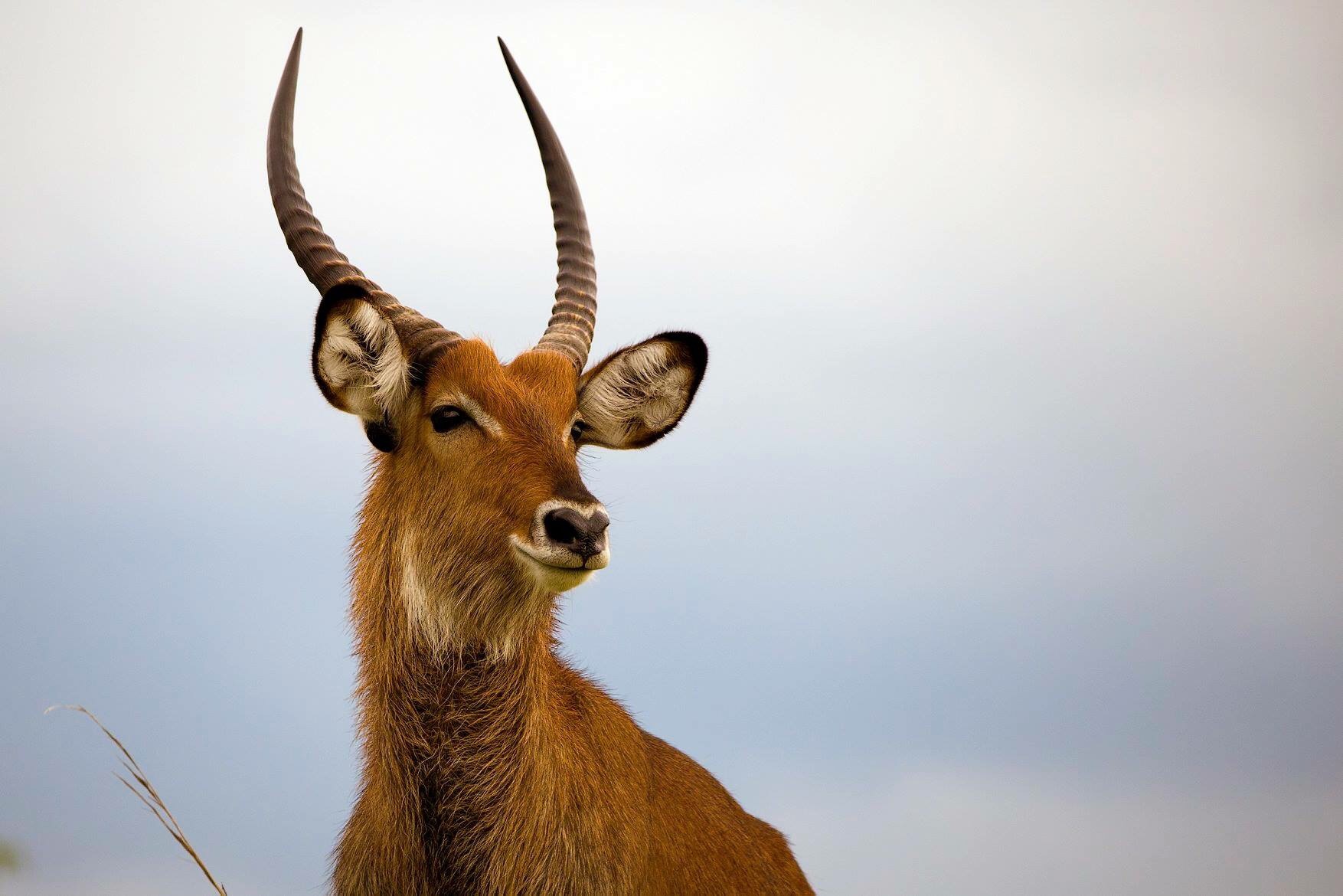
A Waterbuck (Kobus Ellipsiprymnus) an Antelope in Africa.
A Waterbuck (Kobus Ellipsiprymnus) is an Antelope in Africa.
The Waterbuck ( Kobus ellipsiprymnus) is one of the largest antelopes found widely in sub-Saharan Africa. It is placed in the genus Kobus of the family Bovidae. It was first described by an Irish naturalist. Despite its name, the Waterbuck is not truly aquatic, though it takes refuge there to escape predators. It, however, er inhabits areas that are close to water.
 The 2 types that do exist are the common and selfish waterbucks.
William Ogilby in 1833. The thirteen subspecies are grouped under two varieties: the common or Ellipsiprymnus waterbuck and the Defassa Waterbuck. The head-and-body length is typically between 177–235 cm (70–93 in), and the average height is between 120 and 136 cm (47 and 54 in).
A sexually dimorphic antelope, males are taller as well as heavier than females. Males reach approximately 127 cm (50 in) at the shoulder, while females reach 119 cm (47 in). Males typically weigh 198–262 kg (437–578 lb) and females 161–214 kg (355–472 lb).
The coat colour varies from brown to grey. The long, spiral horns, present only on males, curve backwards then forward and are 55–99 cm (22–39 in) long. Waterbuck, as the name suggests, it’s coz they stay in areas close to water bodies so as to avoid dehydration.
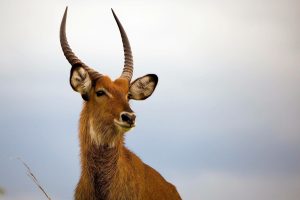 The colour tends to change as they grow older from brown to light grey. The difference between the two is that the deffasa waterbuck has the white patch on the but, lips and the ear. It is said that their meat is not liked by the big carnivores like the lions coz they tend to spoil their meat before death.
This operation is within their body organs, hence leading to their survival from cats since their meat is not loved. They also secrete a stinking smell to predators, or thought to be, to chase them away. Males are horned and females are hornless, from which the age can be determined by counting rings or coils. Gestation is 7-8 months, and a single calf is born.
Bachelor herds can be observed, whereby adult males tend to group with male teenagers. Here, they are always observed being trained in fighting skills. A mixture of males and females, as well as young ones, is occasionally visible, especially for very young ones, for both parenting and defensive reasons.