
10 Facts about the Great Wildebeest of Africa you need to know.
10 Minds Blowing Facts about the Great Wildebeest of Africa you need to know.
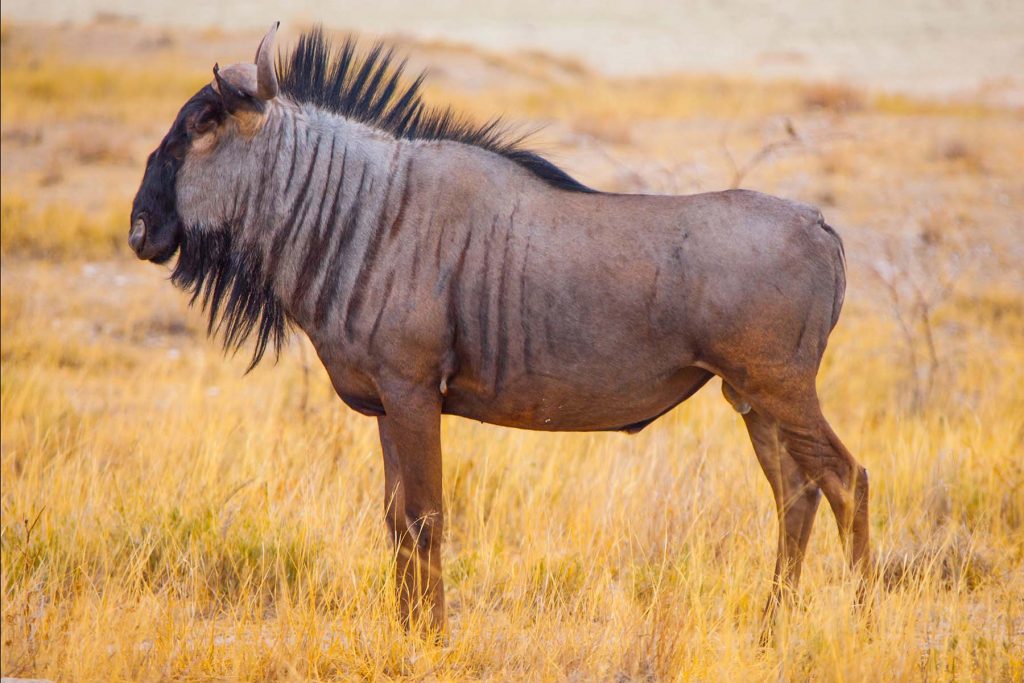
A Full Adult Picture of a Great Wildebeest of Africa.
1. Immense Wildebeest Migration
There is nowhere else in Africa with the movement of animals as immense as the wildebeest migration. Approximately two million animals migrate from the Serengeti National Park in Tanzania to the greener pastures of the Maasai Mara National Reserve in Kenya, mostly during the months of July to October.
2. Largest Land Animal Migration
Their migration is the largest land animal migration in the world, where the animals travel a total of 800 km or more during each cycle. More than 1.5 million wildebeest migrate in an enormous loop every year.
3. Newborn Wildebeest
Over half a million wildebeest are born each year in the Serengeti. In February, the month with the highest calving rate, around 8000 wildebeest are born each day.
4. Migration Movement
The migration may seem like a chaotic frenzy of movement. Research has shown that a herd of wildebeest possesses what is known as swarm intelligence, that is to say, the wildebeest systematically explores and overcomes obstacles as one.
5. Grazing Tactics
You may wonder why zebra and wildebeest graze in harmony together!!! The reason is that they eat different parts of the same type of grass. Zebras prefer full green grass that is short and near the ground.
6. No leader within the Migration
Because wildebeest have no leader, the migration herd often splits up into smaller herds that circle the main herd going in different directions. When considering these smaller split herds, the whole migration can cover over half of the Serengeti.
7. Among the “Seven New Wonders of the World” is the Wildebeest migration.
The Masai Mara and the Serengeti National Park together form what no other reserve or park in Africa can! It is incredible, it is magical, it is indescribable, and it is one you shouldn’t miss paying a visit to.
8. During the migration, a large number of animals lose their lives in the process.
For example, close to 250,000 wildebeest and 30,000 zebra are killed off every year as a result of predation by carnivores, but also from thirst, hunger and exhaustion from lions.
The crocodiles await the herds in the Mara River, drown them by clutching them in their strong jaws and pulling them below the water, twisting them to break off bite-sized pieces.
9. Being Slow, you risk a life
The worry of predators to wildebeest isn’t that high due to the fact that the predators are unable to follow the moving herds very far, for many are territorial and can neither abandon their territories nor invade those of others. Moreover, the young of most predators are highly dependent upon their mothers, who can’t move very far from them.
10. A dynamic cycle of wild movement
The migration doesn’t have a simple start or end, just a dynamic cycle of wild movement through the year. It’s never the same each year, either. Not very predictable,l e but easy enough to witness if you plan around some key points. People usually refer to this as the Serengeti migration.